By Rocky Leal
February 16, 2026
As the owner here at Murrieta Tire & Auto, I can tell you one thing for certain — when it comes to car AC problems, guessing is expensive.
Every summer, we see vehicles come in after someone tried a quick recharge can or had a rushed inspection somewhere else. The air might blow cold for a few days… and then it’s warm again. That’s because proper car AC repair isn’t about adding refrigerant and hoping for the best. It’s about identifying the root cause.
If you’re searching for car ac repair Murrieta CA, I want to walk you through exactly how a professional shop like ours diagnoses air conditioning problems step-by-step — the right way.
Step 1: Listening to the Customer
Before we even open the hood, we listen.
Is the car AC
blowing warm air?
Is it cold only while driving?
Does it make noise when you turn it on?
Is there a strange smell coming from the vents?
These details matter. They help us narrow down whether we’re likely dealing with airflow restrictions, electrical issues, refrigerant leaks, or compressor failure.
A rushed shop may skip this step. We never do.
Step 2: Visual Inspection of the AC System
Next, we perform a full visual inspection under the hood and underneath the vehicle.
We check:
-
AC compressor condition
-
Drive belt integrity
-
Visible refrigerant leaks
-
Damaged hoses or fittings
-
Condenser condition (especially rock damage)
Many car AC failures leave physical evidence — oil residue around fittings, cracked lines, or corrosion on components.
Catching these early can prevent much larger car AC repair bills down the road.
Step 3: Checking System Pressures
This is where real diagnostics begin.
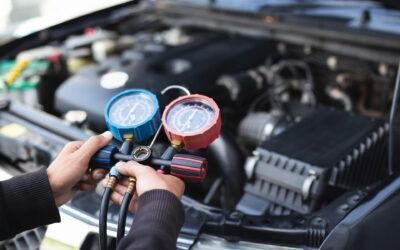
We connect professional manifold gauges to measure high-side and low-side pressure readings. These numbers tell us a lot:
-
Low pressure on both sides? Possible low refrigerant or compressor issue.
-
High pressure spikes? Possible condenser blockage or cooling fan failure.
-
Uneven readings? Possible expansion valve restriction.
Pressure readings give us a snapshot of what’s happening inside your car AC system.
DIY recharge kits can’t provide this level of accuracy — and overcharging can actually damage your compressor.
Step 4: Leak Detection Testing
If the refrigerant is low, we don’t just “top it off.” Refrigerant doesn’t disappear. If it’s low, there’s a leak.
We use:
-
UV dye testing
-
Electronic leak detectors
-
Nitrogen pressure testing for harder-to-find leaks
Common leak points include:
-
Schrader valves
-
Hose connections
-
Evaporator cores
-
Condensers
Skipping this step is one of the biggest mistakes made in improper car AC repair . Without fixing the leak, the problem always returns.
Step 5: Electrical System Testing
Modern AC systems are computer-controlled. That means electrical issues can mimic mechanical failures.
We test:
-
Compressor clutch engagement
-
Pressure switches
-
Relays and fuses
-
Climate control modules
-
Cooling fan operation
We also scan the vehicle’s computer for AC-related fault codes.
Many vehicles today won’t even allow the compressor to engage if a sensor detects unsafe pressure levels. Without proper diagnostic equipment, you’re just guessing.
Step 6: Airflow and Cabin Inspection
Not every car AC issue is refrigerant-related.
Sometimes the system is cooling properly — but airflow is restricted.
We inspect:
-
Cabin air filter condition
-
Blower motor function
-
Blend door operation
-
Vent obstructions
A clogged cabin air filter alone can reduce cooling performance dramatically. It’s a simple fix — but only if someone takes the time to check it.
Step 7: Performance Testing After Repairs
Once repairs are completed, we don’t just send the vehicle out.
We:
-
Vacuum test the system
-
Recharge with manufacturer-specified refrigerant levels
-
Monitor vent temperature output
-
Re-check system pressures
-
Confirm compressor cycling is normal
Only after verifying everything meets spec do we consider the car AC repair complete.
Why Proper Diagnostics Matter
Here’s what we see far too often:
A customer goes somewhere else for a “quick recharge.”
The refrigerant is low because of a leak.
The system gets overfilled.
The compressor fails weeks later.
Now what could have been a minor leak repair becomes a major compressor replacement.
That’s why proper diagnostics protect your vehicle — and your wallet.
The Difference Experience Makes
Not all AC systems are the same. Older R-134a systems behave differently than newer R-1234yf systems. European vehicles have different pressure specifications. Hybrids and electric vehicles use electric compressors that require specialized knowledge.
When you’re searching for car ac repair Murrieta CA , experience matters.
We at Murrieta Tire And Auto Repair Shop invest in:
-
Advanced diagnostic tools
-
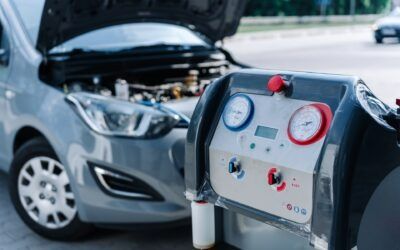
Updated refrigerant recovery machines
-
Ongoing technician training
-
Factory-level scanning equipment
There’s a reason we’re consistently rated as one of the top auto repair facilities in Murrieta. We don’t guess. We diagnose.
Signs You Should Schedule a Car AC Inspection
If you notice any of the following, it’s time to bring your vehicle in:
-
Warm air from vents
-
Weak airflow
-
AC only works while driving
-
Strange odors
-
Clicking or grinding noises when AC is on
-
Water leaking inside the cabin
The sooner we inspect your car AC , the more likely we can prevent a larger repair.
Why Murrieta Drivers Trust Us
At Murrieta Tire and Auto , our reputation is built on honesty and thorough work. We live and work in this community. Our customers are our neighbors.
When someone searches for car ac repair Murrieta CA , they’re not just looking for cold air — they’re looking for trust, transparency, and lasting results.
We provide:
-
Clear explanations of findings
-
Digital inspections with photos
-
Upfront estimates
-
Quality parts and warranty-backed repairs
We fix the root problem so you don’t have to come back for the same issue twice.
Final Thoughts from the Shop Floor
Diagnosing car AC problems isn’t about speed — it’s about precision.
A proper car AC repair involves inspection, pressure testing, leak detection, electrical diagnostics, and performance verification. Skipping steps might save a few minutes upfront, but it often leads to bigger costs later.
If your air conditioning isn’t keeping up with the Murrieta heat, bring it to the team that takes the time to do it right.
At Murrieta Car and Auto Repair Shop , we’re proud to be one of the top-ranked auto repair shops in Murrieta — and we’re here to keep you cool all summer long.
The post How a Professional Auto Shop Diagnoses Car AC Problems Step-by-Step appeared first on Murrieta Tire & Auto.